Water Mitigation in Cool Creek: Emergency Drying Steps
Water is moving through your Cool Creek home or business right now, and every minute it sits, the damage bill climbs. You do not need a sales pitch. You need someone to pick up the phone, show up with truck mounted extractors and air movers, and stop the spread before drywall, subfloor, and framing absorb more moisture than they can give back. That is what water mitigation actually means: the emergency phase between the loss and the repair, where the goal is to extract standing water, drop moisture levels, and prevent secondary damage like mold, warped hardwoods, and ruined insulation.
Cool Creek Water Restoration has been handling these calls across Central Indiana since 2018. We are BBB A+ rated and IICRC certified, which matters because insurance carriers expect documentation that follows the S500 standard. If your situation does not actually need full mitigation, we will tell you directly and walk you through what you can handle yourself. If it does, we will be on site fast, usually within 2 hours inside the Cool Creek service area. This guide walks through the specific problems homeowners and business owners run into during an active water loss, and the exact mitigation response each one calls for.
What exactly are water mitigation services?
Water mitigation is the emergency response phase of a water loss. It is everything we do to stop damage from spreading before reconstruction starts. That includes finding and stopping the source, extracting standing water, removing unsalvageable materials like soaked carpet pad or swollen baseboards, setting up containment so moisture does not migrate into dry rooms, and placing drying equipment to pull water out of the structure itself. Mitigation is not repair. Repair comes after the building is dry and stable. Most Cool Creek insurance policies treat these as two separate scopes, which matters when you are looking at your claim paperwork.
What does mitigation cost in Cool Creek?
Most residential mitigation jobs in Cool Creek fall between $2,500 and $7,500, with the average around $4,000. Smaller single room losses can run $1,500 to $2,500. Whole basement floods or multi floor losses can climb past $10,000. The drivers are square footage of affected area, water category, materials involved (hardwood and tile cost more to dry than carpet), and how long the water sat before we got there. Your deductible is what you pay out of pocket. Everything above that, on a covered claim, goes to us directly through the carrier when you sign a work authorization.
Will my insurance cover water mitigation?
Sudden and accidental water losses are covered under most standard homeowner policies in Indiana. That includes burst pipes, appliance failures, and many roof leaks from storm damage. Gradual leaks, long term seepage, and flood from rising surface water are typically excluded (flood requires separate NFIP coverage). We document everything to the standard adjusters expect: photos, moisture maps, daily psychrometric readings, and itemized scopes using Xactimate pricing. That documentation is what gets claims paid without back and forth. If you want to understand the cost side before filing, our restoration cost breakdown shows where the dollars typically land.
What happens in the first hour after your crew arrives?
The first hour is triage. We confirm the water source is shut off, document the loss with photos and moisture readings for your insurance file, and identify the IICRC water category. Category 1 is clean supply line water. Category 2 is grey water from appliances or aquariums. Category 3 is contaminated water from sewage backups or storm flooding, and it has very different handling rules. If you are dealing with a contaminated loss, our sewage cleanup team follows strict containment protocols to protect the rest of your home. After categorization, we start extraction. A truck mounted unit pulls hundreds of gallons faster than any wet vac, and the more water we remove physically, the less the dehumidifiers have to handle later. We also map the moisture migration using thermal imaging and pin meters, because water travels along the path of least resistance. It wicks up drywall, runs under hardwood, and pools inside wall cavities you cannot see from the surface. Mapping that footprint correctly on day one is what prevents secondary damage like hidden mold growth two weeks later.
How fast can Cool Creek Water Restoration actually get to my Cool Creek property?
Our standard target for emergency calls in Cool Creek and the surrounding Central Indiana service area is within 2 hours from the moment you call. On a heavy storm night when dozens of homes are calling at once, that window can stretch, but we will give you an honest ETA when you are on the phone, not a guess to keep you waiting. Our trucks are pre loaded with extraction units, air movers, and dehus, so the crew that arrives is the crew that starts working. There is no second trip to the warehouse for equipment. Our dispatch runs 24 7, including holidays, because pipes do not care that it is Christmas morning or 3 a.m. on a Tuesday. When you call, you reach a live person who can ask the right questions: how much water, where is it coming from, is the source stopped, are there electrical concerns. That intake info gets relayed to the lead tech before the truck even leaves the bay.
What do I do right now, before the crew arrives?
If it is safe, shut off the water at the main valve or the affected fixture. Cut power to the affected area at the breaker if water is anywhere near outlets or electronics. Move pets, kids, and irreplaceable items (photos, documents, electronics) to a dry room. Pull up area rugs if you can lift them without straining. Do not walk through standing water if you suspect it is contaminated or if power is still live in the area. Do not use a household vacuum to suck up water. Take phone photos of everything, including water lines on walls and damaged contents. Then sit tight. Trying to DIY the extraction with towels and box fans rarely beats the spread rate of the water.
How long does emergency drying actually take?
For a typical Cool Creek home with a Category 1 loss confined to one or two rooms, structural drying runs three to five days. A flooded basement or a multi room loss can run seven to ten days. Hardwood floors and plaster walls dry slower than drywall and carpet. We monitor with moisture meters daily and adjust equipment placement until readings match the dry standard for unaffected areas of your home. We do not pull equipment early to save on rental days, and we do not leave it running longer than the science supports. If you want a deeper breakdown of timelines for submerged basements, our flooded basement cleanup guide walks through the full drying sequence.
Get Mitigation Started Before the Clock Runs Out
If your Cool Creek property has active water damage, the most valuable thing you can do right now is pick up the phone. Cool Creek Water Restoration is IICRC certified, BBB A+ rated, and has been responding to emergency losses across central Indiana since 2018. We will walk your property, give you a straight answer on what can be saved, document everything your insurance carrier needs, and start drying the same visit when possible. If we cannot help, we will tell you directly and point you to someone who can.
What equipment will be in my house, and is it loud?
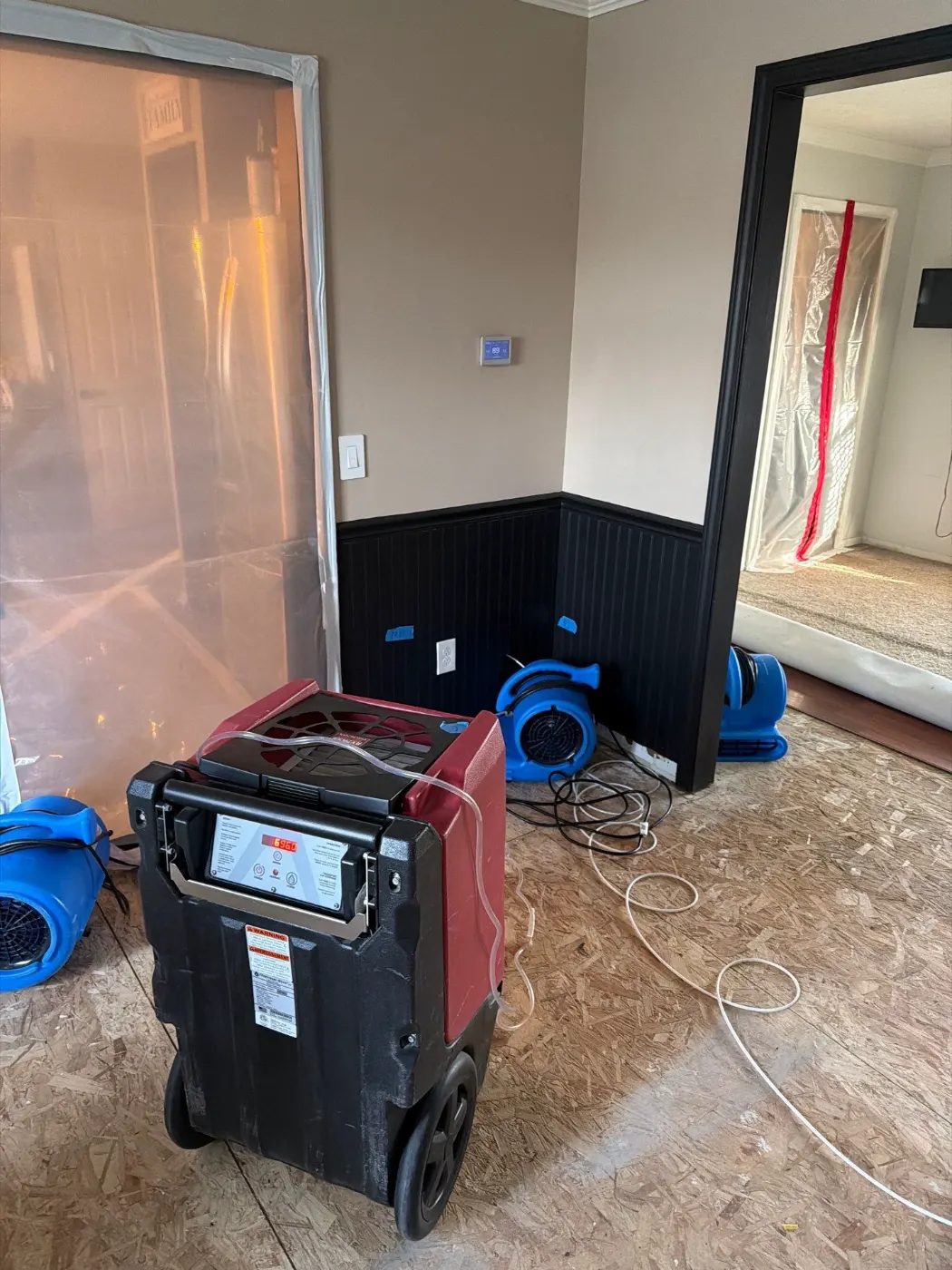
A standard mitigation setup includes high velocity air movers (one every 10 to 16 linear feet of wet wall), at least one low grain refrigerant dehumidifier per affected zone, and HEPA air scrubbers if there is any contamination or mold concern. Yes, it is loud. Air movers run around 65 to 75 decibels, similar to a vacuum cleaner, and they run continuously. Most families in Cool Creek either stay in the home with bedroom doors closed or relocate for the first few nights. If your policy includes loss of use coverage, hotel stays during active drying are usually reimbursable. Keep your receipts. The equipment also pulls real electricity. A typical setup adds 15 to 30 kWh per day to your bill, and most carriers reimburse that utility bump if you submit the before and after statements with your claim.
How do I know when the job is actually finished?
Drying is complete when moisture content in the affected materials matches the dry standard established from unaffected areas of the same home. We take a final round of readings, photograph the meter results, and walk you through the numbers before any equipment leaves. You get a copy of the drying log with daily readings, equipment counts, and temperature and humidity data for the entire job. That log is what protects you if any moisture related issue surfaces months later. It also gives your repair contractor a clean baseline to start reconstruction against, so nobody is installing new drywall over a stud that still reads 18 percent moisture.
Frequently Asked Questions
Do I need to call my insurance company before Cool Creek Water Restoration starts work?
No. In Cool Creek, you can authorize emergency mitigation immediately to stop damage from spreading. We document everything to your carrier's standards and most adjusters prefer that mitigation start before they inspect, because waiting makes the claim larger.
Can I just rent fans from a hardware store and dry it myself?
For a small spill in one room, maybe. For anything involving soaked carpet, wet drywall, or water under flooring, household fans cannot move enough air or remove enough humidity to prevent mold. Professional LGR dehumidifiers pull 10 to 20 times more water from the air than a box fan setup.
What if mold has already started growing?
If the loss is more than 48 to 72 hours old, microbial growth is likely. We bring in containment, HEPA filtration, and our remediation team. Cool Creek Water Restoration handles mold remediation alongside mitigation so you are not juggling multiple contractors in your Cool Creek home.
Will you work directly with my insurance adjuster?
Yes. We send daily drying logs, moisture maps, and photo documentation directly to your adjuster, and we negotiate the scope using Xactimate, the same software carriers use. You stay informed without having to play middleman.
What areas around Cool Creek does Cool Creek Water Restoration serve for emergency mitigation?
We cover Cool Creek and the surrounding Central Indiana region 24/7. If you are on the outer edge of our service area, call anyway. We will give you an honest response time and, if we cannot reach you fast enough, we will help you find a certified crew who can.
Have a restoration question?
Our IICRC certified Cool Creek crew is ready to help. Free assessments, estimate based on what we can sees, no pressure.